
How to Clean Aircon Mould in Singapore: A Guide to Safe Removal and Prevention
Singapore’s year-round humidity creates near-ideal conditions for aircon mould to develop inside residential units. Every time a unit runs, warm, moisture-laden air meets the cold surface of the evaporator coil, triggering condensation. That moisture, combined with dust and organic particles drawn in from the room, gives mould spores exactly what they need to take hold.
While surface mould on the louvres or filter mesh can sometimes be wiped away at home, the deeper colonies inside the evaporator coil, blower wheel, and drainage system require professional servicing to eliminate fully.
Why Mould Grows So Easily in Singapore Aircons
The inside of a wall-mounted or ceiling cassette aircon is a consistently damp environment. Cold evaporator coils, warm humid air entering the unit, and the constant condensation that follows create conditions where mould spores can settle and multiply with little resistance.
Singapore’s tropical climate accelerates this process considerably. As such, even regularly used units can develop mould within months of the last cleaning. Therefore, routine maintenance is critical.
How to Tell If Your Aircon Has Mould
Here are several symptoms of mould in aircon that you can detect without dismantling the unit:
- Persistent musty or damp smell: A stale odour when the unit first switches on, particularly in the opening minutes.
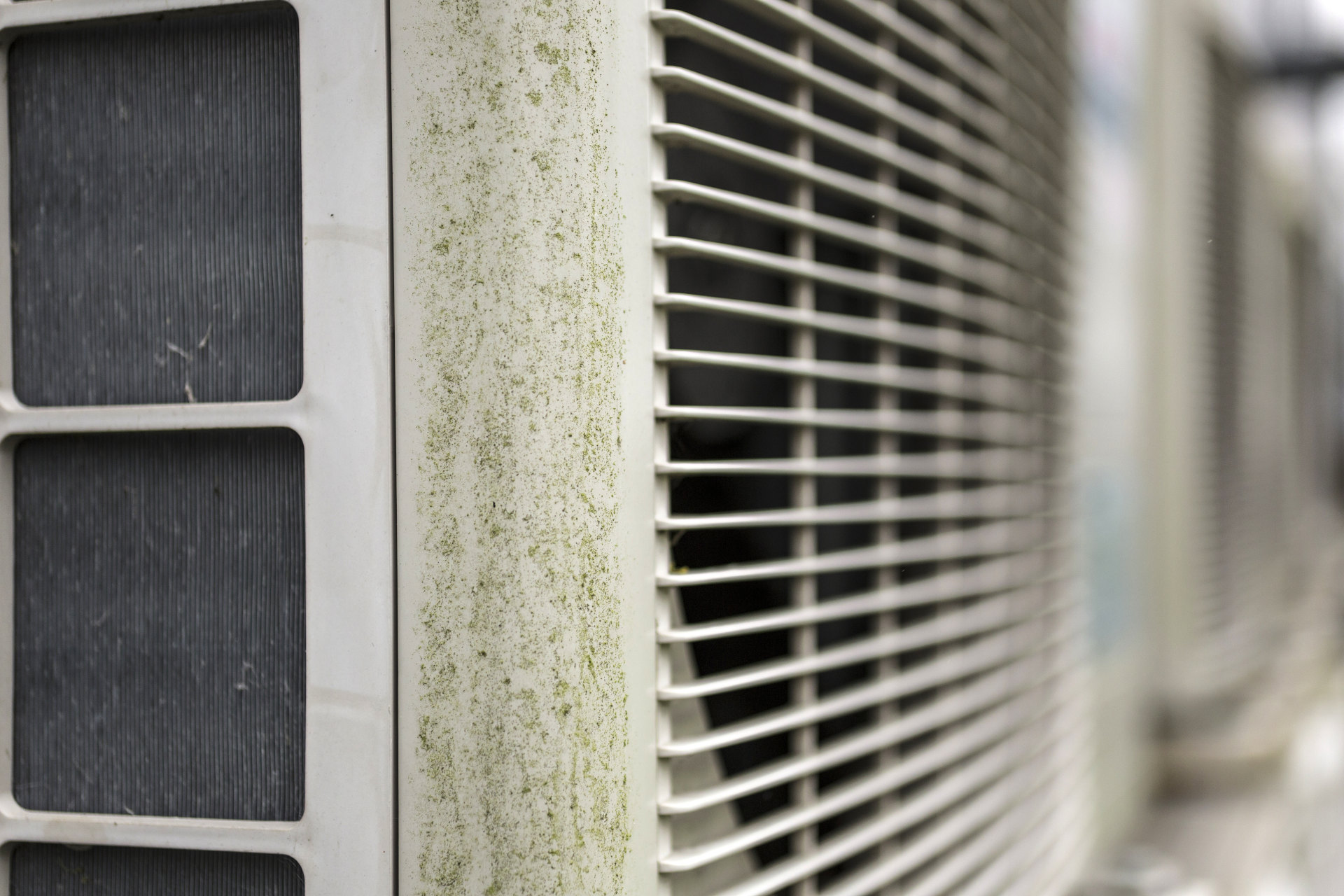
- Visible spots on the louvres or vents: Black, green, or grey patches on the front panels, air vents, or filter mesh.
- Worsening allergy symptoms: Sneezing, itchy eyes, coughing, or congestion that ease when the aircon is turned off.
- Slimy or discoloured residue: Visible buildup on the fan blades or drainage tray when the filter cover is removed.
- Higher room humidity despite the aircon running: Often caused by mould clogging the drainage line, which prevents moisture from clearing properly.
Is Mould in an Air Conditioner Harmful?
Mould inside an aircon releases spores directly into the air circulating through the room, which is harmful, especially for children, elderly residents, and anyone with asthma or allergic rhinitis.
Prolonged exposure can trigger respiratory irritation, skin reactions, and a worsening of pre-existing conditions. As such, treating mould promptly is essential to protect respiratory health and the long-term performance of the unit.
How to Clean Aircon Mould Safely at Home
While internal components will require professional handling, you can still safely address surface mould on several accessible exterior parts of the unit. Here’s how to go about it:
- Switch off the unit fully: Turn it off at the remote and at the isolator before opening any panels.
- Wear a mask and gloves: This protects you against inhaling spores during the cleaning process.
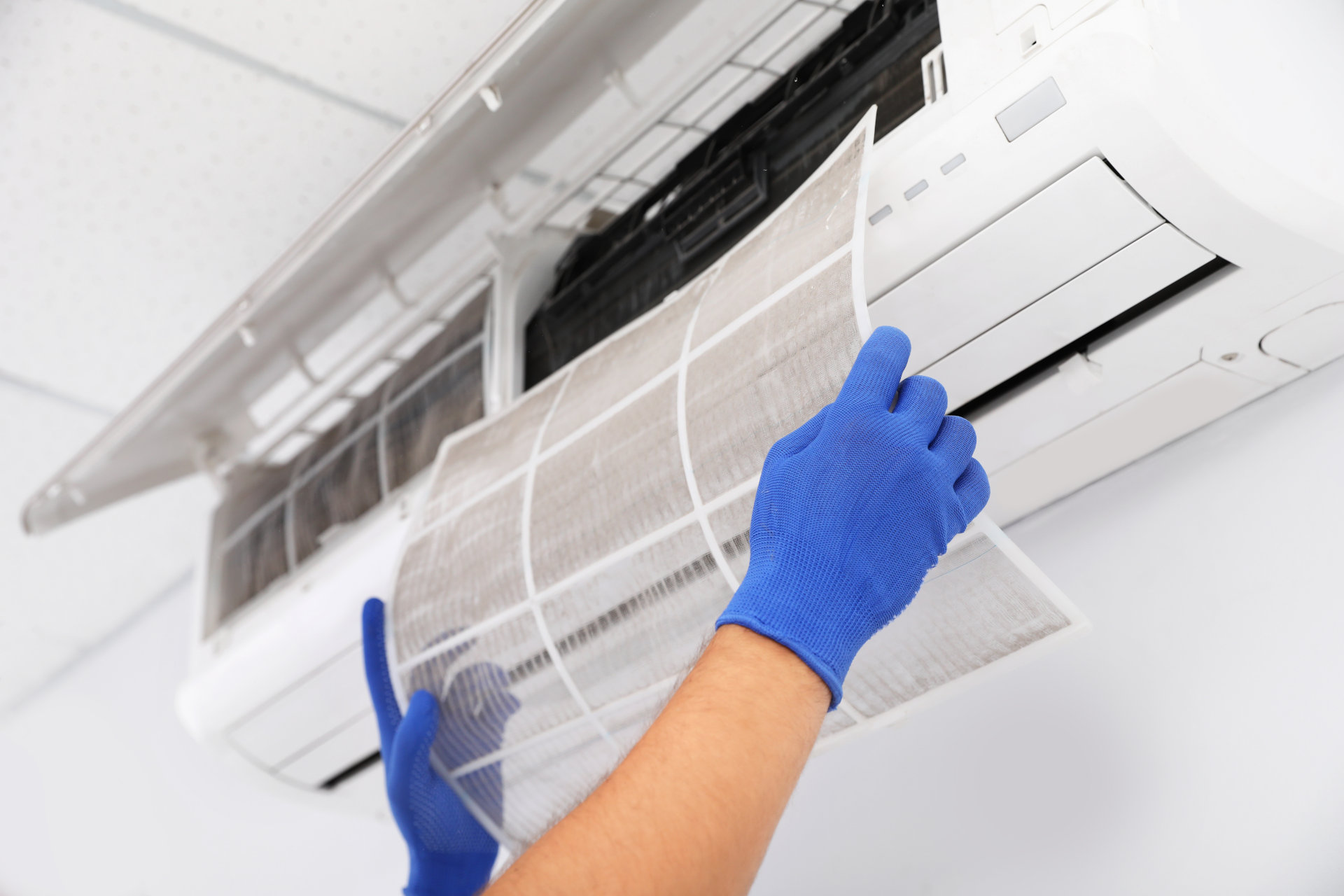
- Remove and soak the filters: Detach the air filters and soak them in warm water mixed with mild detergent or diluted white vinegar for 15 to 20 minutes. Rinse thoroughly and air dry completely.
- Wipe down the exterior: Clean the louvres, vents, and outer casing with a soft cloth dampened in the same solution.
- Reassemble only when dry: Allow all parts to dry fully before powering the unit back on.
Do not spray cleaning agents directly onto the evaporator coil, electrical components, or blower wheel, as this can damage the unit and drive mould spores deeper into the system.
If a musty smell persists after a basic clean, it indicates mould has reached the internal coils and drainage system beyond surface reach. In such cases, consider engaging an aircon servicing chemical wash.
How to Prevent Aircon Mould from Returning
Without consistent maintenance, mould reappears quickly in Singapore’s climate. As such, prevention is your most cost-effective long-term strategy. Adopt the following best practices:
- Run fan-only mode before switching off: Ten to 15 minutes of fan-only operation dries out the evaporator coil and reduces trapped moisture.
- Clean filters every two to four weeks: Adjust the frequency based on usage and household conditions.
- Schedule professional servicing every three months: Routine visits catch early mould growth before it spreads to internal components.
- Use the dehumidify mode where available: Keeping indoor humidity below 60% reduces the conditions under which mould needs to grow.
- Book a chemical overhaul for older units: For units more than five years old, or those with a history of recurring mould, get an aircon overhaul cleaning to dismantle and treat every internal component.
When to Call a Professional for Aircon Mould Removal
Recurring mould, a persistent smell after home cleaning, or visible growth on internal components are all signs that the problem has spread beyond surface treatment. At this point, a professional chemical wash or overhaul is necessary to clear the system fully.
As mould buildup restricts airflow and places unnecessary strain on key internal components over time, addressing the issue promptly also protects the unit’s long-term performance.
Looking to book a deep clean, chemical wash, or overhaul? Look no further than Ayafa Aircon. As a trusted aircon company in Singapore, we bring over 15 years of experience in mould removal to help you restore your unit and comfort.
Contact us to book your appointment today.